If she was Roberta, we wouldn’t have heard of her!!
by Caroline Brazill.
Robert Burns: An Immortal Memory, born on 25January 1759 and died on 31July 1796, aged 37.
According to a leading historian, ‘Robert Burns was a “racist, misogynist drunk unfit to promote Scotland’s 2009 Homecoming celebrations ” (The Scotsman 2009). The historian in question was none other than Michael Fry. In 2015, in promoting her BBC Radio Scotland documentary on Robert Burns, Keary Murphy described Rabbie’s ‘notorious reputation as a womanizer’ (2015), and Robert McFarlan, introduced the Works of Robert Burns in Wordsworth Poetry Library, by stating that, ‘Burns’ work has not traditionally been a female taste’.
Whether Burns was, or wasn’t to our taste, woman, well Scotswoman in their home nation, didn’t often get the chance to find out, denied access, excluded from one of the most popular events of the Scots calendar – The Burns Supper.
So, why is an LGBT+ champion, a founding member of GEN, a women’s race, and in-equality in education group, supporting Burns and indeed heading out this evening to a previously recorded Maya Angelou screening on appreciation of the works on Robert Burns. An ardent feminist, who had the privilege and foresight to see and read Maya Angelou’s work from an early age, following her from the late 80’s, with my ‘women’s consciousness raising group’, from live shows in Hackney to the Royal Concert Hall. Why have I, no conscience in celebrating the work of a ‘racist, misogynist drunk unfit to promote Scotland’? Why do I hold no truck with Michael Fry’s position, and why would BBC Radio Scotland air Keara Murphy’s show, on the writings of a ‘notorious womanizer’. And, indeed to Maya Angelou, a groundbreaking feminist and civil rights activist, what of Burns could inspire Maya Angelou’s writing? McFarlan went on to say that, images of Burns, ‘taken singly are at best only partial and at worst grossly misleading. The Works of Robert Burns (1994, p.vii).
What are the insights which make the man, the man for me, ‘For a’ that and a’ that’, (Burns 1795, line 5), what treasures bring me, to right my wrong, and bring me to write? I take these pages to share my insights of what makes the man, the man for me and awe that, and bring me to the page of Burns.
An arrested Development.
My pathway to Robert, was an arrested development. The floodgates to perception opened, when invited to deliver an Immortal Memory to an all-female Burns Supper. An oxymoron in terms, I thought, as I sat down to read the words of the man in the realm of the woman, with limited aspiration of finding worthy anecdotes. A history of partisan non grata. exclusion, evidence enough of an endeavor which would yield little for this ‘sister’ of woman identified woman.
My earliest and best forgotten memory of Burns was being forced to stand and recite: ‘O my Luve ’s like a red red rose, that’s newly sprung in June; Burns (1794, Lines 1-2). This rendition took place in January and the only blooming being done was by the weather and linked to the word frozen.
The poem itself, apparently appeals to the gentler sex, containing all kinds of connotations to the imagery and language of love. This was love lost on a group of inner city Glasgow secondary school students, overlooking the Red Road flats, domiciled in a breeze block council estate, raised on a diet of doomed youth, punk rock and Sex Pistols, we were more attuned to wit in the form of Billy Connolly and the term ‘bard’ was more likely a reference to your father and the pub.
Formal exclusion began on the 25th of January 1982, not from school, I hastened to add, where the endeavor of the teaching staff may not have won me to Burns, but secured me a place in higher education. In the second semester of my student years, as the male contingent of my college, wafted off into Edinburgh’s ether, shrouded in mystique. Whether to Bat caves, dens of iniquity, bars, or taverns, I knew not, off they went, appareled in institutionalized garb of tails and tie or kilt and sporran, the only night of the year women were not welcome. This annual gathering of the male clan continued into my working life, the date and event had no saltus, circumnavigating geographic boundaries: such was the institution of the “Burns Supper” the only occasion of the year ‘my name was not down and I wasn’t getting in’.
A ‘Bird’s Eye View!
As my career, took off, it me from London to Paris, Amsterdam, Belgium and New York, including a chapter promoting food and drink from Scotland, this phenomena came too, as New York’s nomenclature suggests, the Big Apple supersized the supper to epic proportions. Public displays of diasporic panic ensued, in a pre-world-wide-web era, that god forbid they did not have the words to ‘Tam o’Shanter’, its two hundred and twenty six lines epic, its Burns ‘most sustained single poetic effort’ The Canongate Burns (2003, p.269). An international disaster was narrowly averted on one such occasion, when a careless attaché and ‘his’ case went missing, whether it was Scotch mist, ‘Uisge Beatha’ or a women’s sleight of hand, we will never know, but safe to say it was a women who saved the day from seismic disaster if nothing more than to get a ‘bird’s eye view, she later laughed, of the male shenanigans.
So as the aftermath of Christmas and the clock turned on a New Year, the Burns supper, falling a month to the day after Christmas was a constant reminder of a party to which I and the sisterhood were not invited. As office politics turned from mortifying memories of Christmas parties to Immortal Memories of Robert Burns, my exclusion marked by biological gender, of my being a lassie, not a laddie, as some of the more witty of the male contingent observed. This was typical throughout the 1980s and 1990s despite the booming 1990’s renowned for hospitality, and abundance there was never a shortage of Burns suppers, plenty to go around, one would have thought, but not for women, despite as Miles states in Danger Men At Work, ‘the exclusion of girls because they are girls was pronounced illegal in this (The UK) and other countries years ago’ Miles (1983, p.50).
The Baggage of Burns
Either way, I was not getting in. The jokes and sexual repartee, lurid, as male colleagues and associates practiced and perfected their oratory and olfactory sense for sniffing out a ‘guid’ malt and a Burns anecdote. Ribald and worthy of a Ricky Gervais sketch, on the few occasions when the ‘fairer’ sex, in every sense, did manage an invite to a supper, they were not for the feint hearted, feminist or no, #metoo was decades off, and to keep our jobs, dignity, sanity and temper, we left as the after dinner speeches progressed from: jokes, sexual repartee, ribald comments, a far cry from anything ‘loosely’ termed banter today, the majority was ex-rated, certified beyond ‘18’ and nothing short of verbal porn.
As grown men conspired with great deliberation over speeches and poems, making a meal out of who was going to Address the Haggis, the only thing the women addressed were the envelopes for the invitations.
Burns for me then, was synonymous with all that was male; a ‘smokers’, a black tie, a bastion of chauvinism and sexism, offset with a healthy quotidian portion of puerile juvenile nonsense, undertaken in the guise of celebrating the words and lyrics of another of their exemplary kind. I stood with McFarlan with no taste for Burns and not far behind Fry. This, I perceived as the great national heritage or as I preferred, baggage of Burns.
As grown men conspired with great deliberation over speeches and poems, making a meal out of who was going to Address the Haggis, the only thing the women addressed were the envelopes for the invitations.
Burns for me then, was synonymous with all that was male; a ‘smokers’, a black tie, a bastion of chauvinism and sexism, offset with a healthy quotidian portion of puerile juvenile nonsense, undertaken in the guise of celebrating the words and lyrics of another of their exemplary kind. I stood with McFarlan with no taste for Burns and not far behind Fry. This, I perceived as the great national heritage or as I preferred, baggage of Burns.
Neither quisling nor participant, no aspiration or concupiscence resided in me for Burns, whether he was a man, ‘For a’ that and a’ that’ was of no consequence, his works were left on the shelf.
Enlightenment: Sisters Doing It For Themselves!!
And so, two decades later, not to be thwarted, in the early noughties, enlightenment, and enchantment arose, as I marched through Burns’ material for a women’s Burns supper. I was a decade behind Maya Angelou, and many others, who came across Burns and cut through the wheat from the chaff, of cultural misogyny. What I discovered in Burns, did not offend, this ‘racist misogynist drunk’ was not apparent and if you consider, as Fry did, that Burns is not worthy to be a national bard nor represent Scotland, I will not send you home as Robert the Bruce did with Prince Edward, but I will ask that you think again and endeavor to provide reason, by reference to my own conversion to Burns, from ostracized exclusion to measured devotion and literary companionship.
Researching the works, each time I departed a poem, I was left hungry for more, nuggets of wisdom leapt from the page. My thirst and passion in An Address to A Haggis’ (Burns 1786, line 2) led me not to a ‘puddin’-race, but a human race. I became in Baudelaire terms, drunk on words, ‘our intoxicant of choice can be wine, virtue or poetry’ Le Spleen De Paris, (Baudelaire, (Drabble), 2002, p.xv)
I began to find shared commonalities, his predilection for the company of women. I too liked the company of women. He may have been something of a womanizer, as Keary points out, but I am sure many of the LGBT+ community could confess to same, a shared grace or disgrace, as it were. Equal in measure, his thirst for the ladies but Burns appears no worse than many of his time when violence and vice proliferate with widescale prostitution.
The 1700s was a time of great squalor, many lived amidst a cesspit of despair and degradation. Herman’s seminal work, The Scottish Enlightenment, captures Hume on 1700 Scottish civilization, ‘… surrounded by a seething crawling cesspool of passions, our own as well as those of others … left to ourselves there would be murderous chaos’ (1997, p.192). Herman states of the 1700’s that ‘if poverty was one keynote of highland life, war and violence was another’ (1997, p.124). This aspect was not limited to the highlands and was symptomatic across Scotland at the time.
But Fry’s misogynistic Burns is not evident, and neither was racism, whilst recorded as having numerous affairs with woman, Burns, often wrote odes and poems to them. His first poem at the age of 15, ‘O, Once I Lov’d A Bonnie Lass’ was penned to his first love Nell, ‘For absolutely in my breast, She reigns without control’. (Burns 1774, lines 28-29). Not many of the darker sex, nor the fairer, for that matter, sentimentalize such a state of the affairs of the heart, nor make such public admission. It is undisputed that Burns had many a dalliance with woman and lived at a time when woman were viewed as commodity, as property, chattel to the highest bidder. Yet he held no counsel with this, and in his poem ‘The Fornicator’, the words imply that he respects his partner and sees as her an equal, ‘while I own a single crown, She’s welcome for to share it;’ (Burns 1784, lines 27- 28).
This was no idle statement, and Burns became to be one of the first male supporters of equality for women, as expressed in his poem The Rights of Women, Denoting his support of women, in words which could have been penned by Emmaline Pankhurst or Mary Wollstonecraft, he mirrors sentiment of Wollstonecraft The Vindication of the Rights of Women, both Burns and Wollstonecraft writing over 150 years before women achieved the right to vote:
The Rights of Women
WHILE Europe’s eye is fix’d on mighty things The fate of empires and the fall of Kings; While quacks of State must each produce his plan, and even children lisp, The Rights of Man; Amid this mighty fuss, just let me mention, THE RIGHTS OF WOMAN merit some attention (Burns 1792, lines 5-6)
Testimony to Burns as an enlightened egalitarian and, hardly, the work of a misogynist. His words agitate, incite and finish with a flourish of pomp and circumstance, its subject matter clearly that of supporting women.
But truce with Kings and truce with Constitutions, With bloody armaments and Revolutions; Let MAJESTY your first attention summon: Ah! ça ira! THE MAJESTY OF WOMAN!!! (Burns, 1792, lines 35-38)
The case and taste for Burns continues, in his contribution to women’s rights, equality, justice and emancipation, Pankhurst, over one hundred years later was still pleading:
Pankhurst
We women, in trying to make our case clear, always have to make as part of our argument, and urge upon men in our audience the fact – a very simple fact – that woman are human beings (Pankhurst, E. (1913), Freedom or Death [Speech Fundraising Tour of US] (The Guardian (2007)
Examining the suitability of Burns to represent and promote Scotland’s Homecoming, he demonstrates his position as a nationalist and ‘remainer’ from anonymous letters ‘on unequal struggle for independence’ as highlighted in the Canongate Burns (2003, p.25) and halting his intention to go to Jamaica when his first book, Poems Chiefly in the Scottish Dialect, was published in Kilmarnock in June 1786, providing enough funds for him to remain in his native Scotland.
If further evidence of his egalitarianism and fitness to represent Scotland is required, then the song, ‘For A’ That and A That’, when he refers to ‘rank’ as a ‘but a guinea stamp’ and having no bearing on the man, he drives at inequality often levied by rank within the class system, ‘The rank is but the guinea stamp ; The man’s the gowd for a’ that’ (Burns 1795, lines 7-8). This is in contrast to a statement made by Joseph and Sumption, in their book, Equality, they state,
The closed Door!!
The evil traditionally associated with a rigid class system – the waste of talent kept in its place by an immobile society had never been a feature of British society…The ranks of the Establishment have always been open to able outsiders. (1979 :36)
Burns may have rose from the ranks to enjoy elevated status amongst Edinburgh literati, but it does not detract from his stance on class and support of equality and his understanding that a class system did prevail and ‘able outsiders’ did not always find the doors open.
If further proof is asked of his credentials to represent Scotland, it is cemented in his penning of ‘Scots Wae Hae’, in literary terms and symbolism, the narrative reveals a master at work. Conjuring dialogue that Robert the Bruce may have had with his men before they went to the Battle at Bannockburn. Burns delivers an uncanny depiction of a soldier before battle, an athlete before competition, of plausible dialogue ahead of war. He imagines and scribes a vivid soliloquy that Bruce delivers to motivate his soldiers to their finest hour:
Scots Wae Hae ….
Wha will be a traitor knave ? Wha can fill a coward’s grave ? Wha sae base as be a slave ? Let him turn and flee !
Wha for Scotland’s King and law Freedom’s sword will strongly draw Freeman stand or freeman fa’ ? Let him follow me ! / Let us do or die ! (Burns 1793, lines 1-16/ 24)
Fighting talk indeed, often absent in recent years in the field of Scottish men’s football, in 2019 as the Scottish men fell afoul of a rout at the hands of Russia, a word of two from Robert Burns book may have powered the stock and injected some much-needed psychological capital into the men’s game. Post-match comments, from, Steve Clarke, team manager at the time, verifies, ‘I have to put it down to fragile confidence’, Clarke said, ‘The players seem to lose heart very quickly,’ BBC News Scotland: Russia thumping must be ‘lowest of the low’https://www.bbc.co.uk/sport/football/50009185
Had Burns been in that camp, their hearts would have been on the pitch!! Perhaps like Maya Angelou, women listen more readily, and read between the lines, despite ‘their previous ostracization!! For ‘awe that’ the Scottish women’s team have fared better with far more limited resources.
Edward, proud though he was, may have taken 18,000 men with him, a believer in that old adage of safety in numbers. Yet Bruce with only 8,000 men defeated Edward and indeed sent him home to think again. From a result such as that, one ponders that Burns was indeed party to the script and human spirit that Bruce instilled in his men that day.
Communicator
From ‘low roads to high roads’, Burns’ legacy is colossal, as a communicator of information, his written work sits comfortably with Grice’s, ‘Cooperative Principal’ for effective conversation, outlined in Logic and Conversation. The criteria given by Grice as quality, quantity, manner and relevance, (Grice, H.P. 1975) an apt application to Burns.
Perhaps, it was his protestant work ethic, which kept his penmanship so close to humanity. In the example of The Holy Fair, Burns demonstrates his defense of working-class rights, I no longer question the wisdom of my teachers, and their ill-fated attempt to win me over to Burns, I simply endeavour to read more of his work and apply its relevance to today.
If Burns were around today, there would be something of the constant gardener in him, with his father a gardener of the land, and Burns himself a worker of the soil, he has left his mark indelibly on the ground. This may explain his earthy humour. Indeed, his father helped lay part of the meadows, whilst working in Edinburgh as a lowly gardener – spare a thought the next time you traipse pass.
But it is in Burns’ unique sense of human value and spirit of symbolism that we owe most, and in his contribution to Scottish heritage. Many compare the sentiments for a that and a that” with the declaration of Arbroath and the Magna Carta,
Declarations
The man’s the guid for a’ that
“it is not for glory, riches or honours that we fight it is for liberty alone that no good man relinquishes but with his life”
and for a that and a that: “The rank is but a guinea stamp The man’s the good for a that”
In describing my journey to Burns I hope I have opened the heart of the reader to welcome Robert, into their hands as they would a friend, with a hearty handshake and a warm embrace, convinced that he is neither misogynist nor racist, worthy of the moniker of national bard. For those who find strength, comfort or solitude in books and words, Burns is a quintessential companion. I have scratched the surface, for the humanities scholar his work is a treasure chest from culture and gender to language and linguistics.
Burns enjoyed good company and friends, sometimes we overlook the importance of friends in our life. There is a poem, that once lead me back to Burns, having abandoned him for a while on my bookshelf, it is a poem that identifies Burns as a perceptive and uncannily shrewd writer, he captured, for me, the essence of friendship.
In his poem, ‘A Bottle and A Friend, Burns captures the importance of friendship. Where Carol King https://www.youtube.com/watch?v=VbMI4imWFzY lulls, comforts and cajoles, Burns cocks the gun and releases the bullet. Synonymous with the sentiment of conviviality present at a Burns Supper, Marsilio’s letters of 1479, captured in Meditations On The Soul teaches that
Marsilio, 1479
that ‘nothing in life is more rarely acquired or more dearly possessed. No loss bodes more ill or is more perilous than that of a friend’ (2002: 179).
Burns captures the epitome of friendship
Here’s a bottle and an honest friend What wad ye wish for mair man? Wha kens, before his life may end, What his share may be o’ care man? Then catch the moments as they fly, And use them, as ye ought, man. Believe me, happiness is shy, And comes not aye when sought, man. (Burns 1787, lines 1-8)
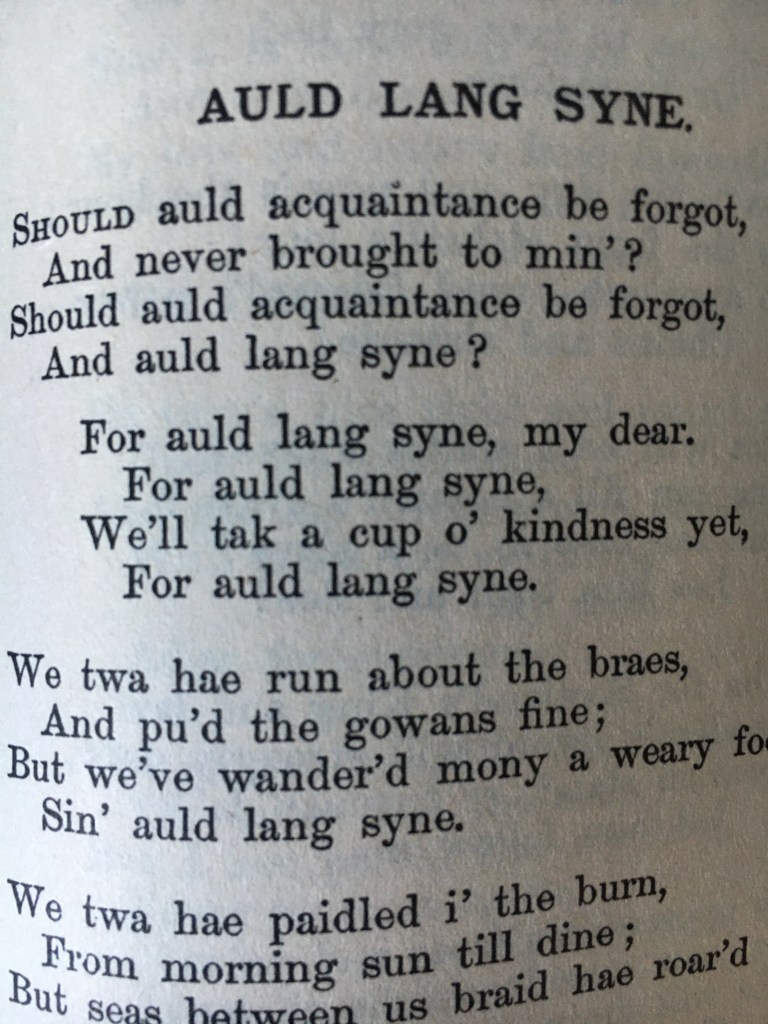
If you require further convincing of his tenure on friendship then Auld Lang Syne, befits the bill. The story of Auld Lang Syne, is based on two young men, who drift apart after their early years at school together, and who after reuniting, reminisce about their earlier times together, a modern day Face Book or Friends Reunited.
For Burns conviviality was essential, coupled with the love of mankind and his ideal of international brotherhood, I talk not of his free mason association, but of international brotherhood, in the same way he we express ourselves in international sisterhood. Robert Burns is a national treasure; not one to be locked away in a dusty archive, or vault, but to sit open, by bedside or fireside, an invaluable companion and a positive contributor to humanity. Whether he led on the Scottish vernacular or harnessed our heritage, with measured insight and literary genius, his immortal memory we hold dear as we would a friend As we prepare to take leave from our friend Robert on the page, look to all of our friends both here and absent.
Please raise a fictional glass and join me in a toast to a master of his craft, and finish with his parting words on absent friends to Robert and the rest, to auld acquaintance, aye …
The following work entitled “On a Friend” bears witness to his studied measure of friendship.
I have taken artistic licence here and substituted woman for man.
This is a poem that Burns wrote to the passing of a friend:
I am dedicating this work to Here lies a friend …. Lisa Wishart, recently departed, In a friend, I could think of few better qualities,
To absent friends …
An honest woman here lies at rest As e’er god with image blest; The friend of woman, the friend of truth The friend of age, and guide of youth: Few hearts like hers with virtue warm’d, Few heads with knowledge so infom’d: If there’s another world, she lives in bliss; If there is none, she made the best of this.
Who keeps the memories alive? We do, from generation to generation, through recounting his story and her story. We are the historians and keepers of the memory chest.
In celebrating his life, let’s not forget our own. Please raise a fictional glass and join me in a toast to the immortal memory of Robert Burns and absent friends.
Bibliography
Baudelaire, C. (2002) On Wine and Hashish, London: Hesperus Press

 BrazillBlog
Leave a comment